 Source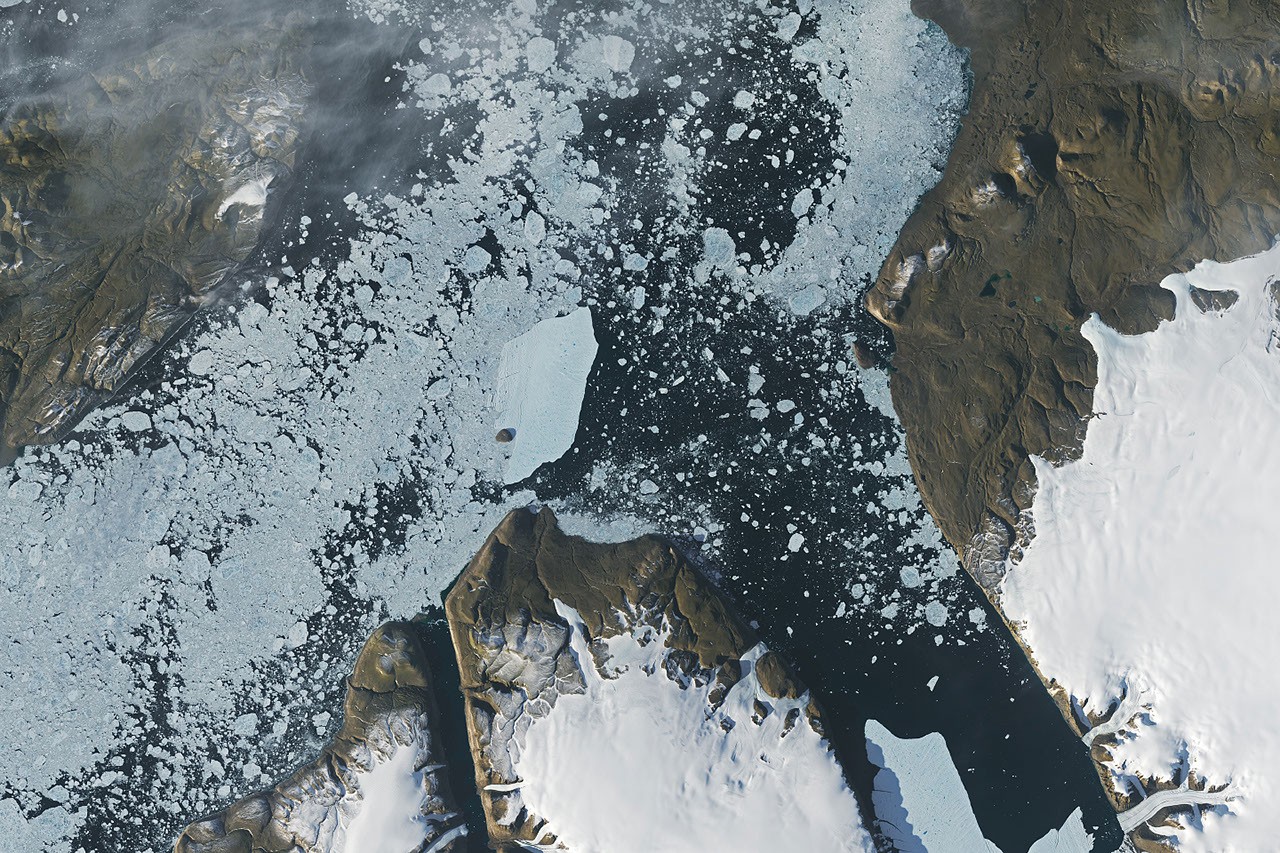
Ice Island Survives Run-In With Joe Island
In August 2026, a large iceberg calved from the Petermann Glacier in northwest Greenland and collided with Joe Island without breaking apart. The event marks the largest calving by an Arctic glacier since 2020.
Why it matters
Large drifting ice islands can pose hazards to marine infrastructure and shipping activities. Additionally, the stability of the Petermann Glacier has long-term implications for global sea level rise.
The details
The iceberg was estimated to be less than 150 meters thick. While a 2010 ice island split in two after hitting Joe Island, the 2026 berg survived the encounter without further fragmentation. Previous major calving events at this glacier occurred in 2008, 2010, and 2012.
What's next
Two remaining large rifts are expected to eventually produce new ice islands of roughly 94 square kilometers and 84 square kilometers.
Show entities and relationshipsHide entities and relationships
In this article
People
Technologies
Countries
Key connections
Adam Garbo works at University of Ottawa
Adam Garbo, a doctoral student in glaciology at the University of Ottawa
Adam Garbo uses Remote Sensing
Garbo and an international team of colleagues have been using remote sensing to study and track the glacier's ice tongue
images from NASA-USGS Landsat satellites
Operational Land Imager is related to OLI
the OLI (Operational Land Imager)
Get the weekly recap
The stories like this one, picked and explained — once a week, straight to your inbox.