 Source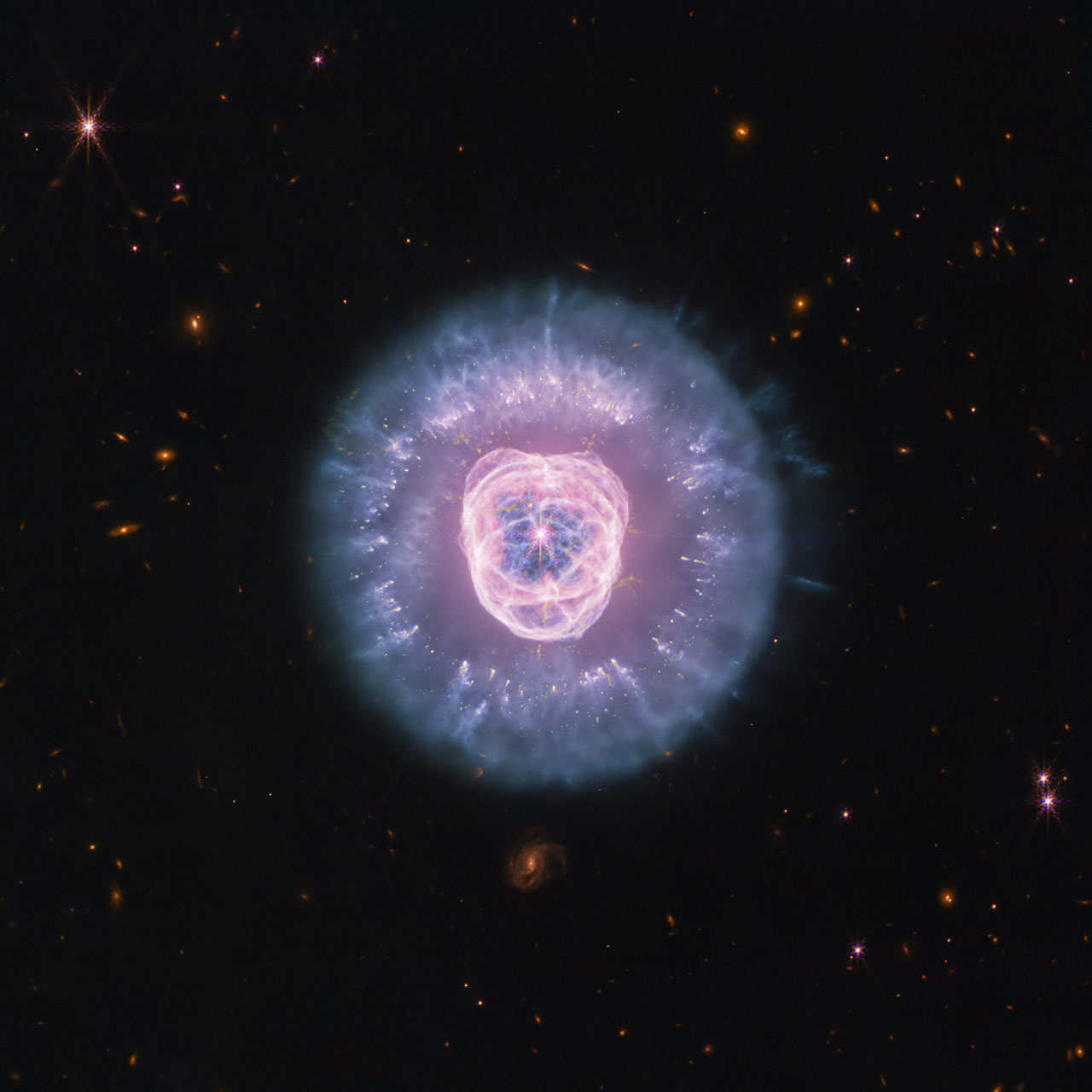
Lion Nebula Roars to Life With NASA’s Webb
NASA’s James Webb Space Telescope captured high-resolution infrared images of the planetary nebula NGC 2392, also known as the Lion Nebula. The structure consists of ionized gas and dust created by a dying lower-mass star.
Why it matters
These detailed views help astronomers study how stars shed their outer layers to create cosmic dust and shape planetary nebulae.
The details
- Webb used NIRCam and MIRI instruments to capture these infrared images.
- The nebula is estimated to disperse in approximately 10,000 years.
- A white dwarf core produces the radiation powering the nebula's structure.
Show entities and relationshipsHide entities and relationships
In this article
Technologies
Key connections
NIRCam is an instrument aboard NASA's James Webb Space Telescope.
MIRI is an instrument aboard NASA's James Webb Space Telescope.
ESA is an international partner in the NASA-led James Webb Space Telescope program.
CSA is an international partner in the NASA-led James Webb Space Telescope program.
James Webb Space Telescope uses NIRCam
James Webb Space Telescope uses NIRCam to capture high-resolution near-infrared images of NGC 2392.
James Webb Space Telescope uses MIRI
James Webb Space Telescope uses MIRI to capture mid-infrared images of NGC 2392.
Show 3 more connectionsShow fewer connections
James Webb Space Telescope is related to Hubble Space Telescope
James Webb Space Telescope's infrared vision complements and advances upon Hubble's earlier visible-light observations.
James Webb Space Telescope uses Infrared Imaging
James Webb Space Telescope utilizes infrared vision to reveal fine structures in planetary nebulae.
Hubble Space Telescope uses Visible Light Imaging
Hubble Space Telescope imaged the Lion Nebula in visible light.
Get the weekly recap
The stories like this one, picked and explained — once a week, straight to your inbox.