 Source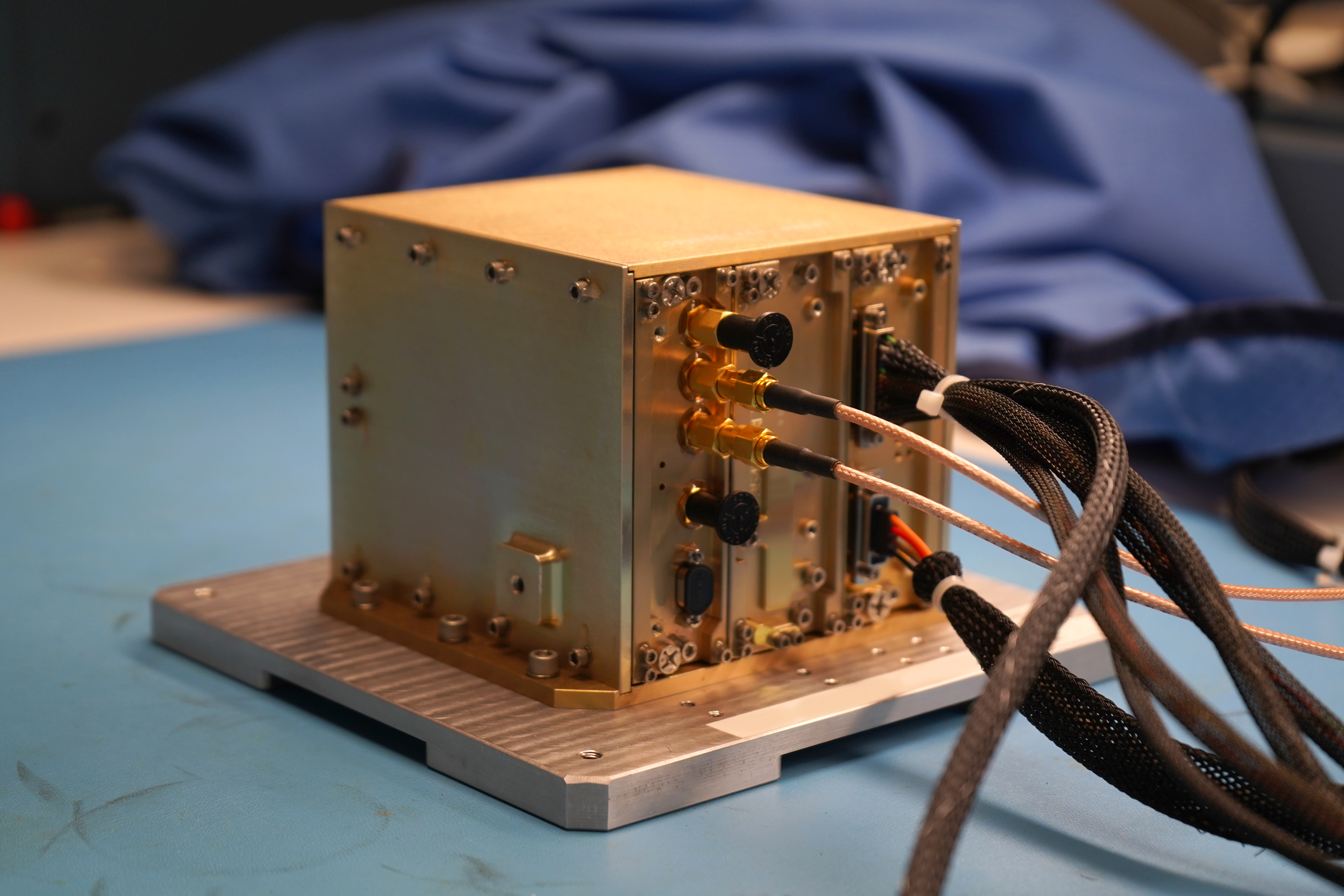
NASA Delivers Navigation System for Commercial Lunar Relay
NASA delivered the NavCube3-mini navigation payload to Intuitive Machines on July 13 for integration into the Altus-1 lunar relay satellite. This initiative supports the development of communication and navigation services for future lunar missions.
Why it matters
These capabilities allow astronauts and rovers to operate more safely and autonomously in challenging areas like the lunar South Pole. This infrastructure is necessary for maintaining a sustained human presence on the Moon.
The details
- NavCube3-mini uses Earth-based GPS and Galileo signals to determine spacecraft position.
- The payload weighs 3.5 pounds and consumes less than 20 watts of power.
- Artemis astronauts are scheduled to land at the lunar South Pole in 2028.
Show entities and relationshipsHide entities and relationships
In this article
Organizations
Products
Countries
Companies
People
Technologies
Key connections
NASA Goddard Space Flight Center is a member of NASA
NASA Goddard Space Flight Center is a primary field center of NASA.
NASA owns NavCube3-mini
NASA developed and delivered the NavCube3-mini navigation payload
Munther Hassouneh works at NASA Goddard Space Flight Center
Munther Hassouneh serves as NavCube3-mini project manager at NASA Goddard
NASA is a partner of Intuitive Machines
NASA contracted Intuitive Machines under the Near Space Network Services contract for lunar relay services
NavCube3-mini is related to Altus-1
NavCube3-mini is integrated as a payload aboard Altus-1
NavCube3-mini uses Global Navigation Satellite Systems
NavCube3-mini uses GPS and Galileo GNSS signals for lunar navigation
Show 1 more connectionsShow fewer connections
Intuitive Machines owns Altus-1
Intuitive Machines develops the Altus-1 lunar data-relay satellite.
Get the weekly recap
The stories like this one, picked and explained — once a week, straight to your inbox.