 Source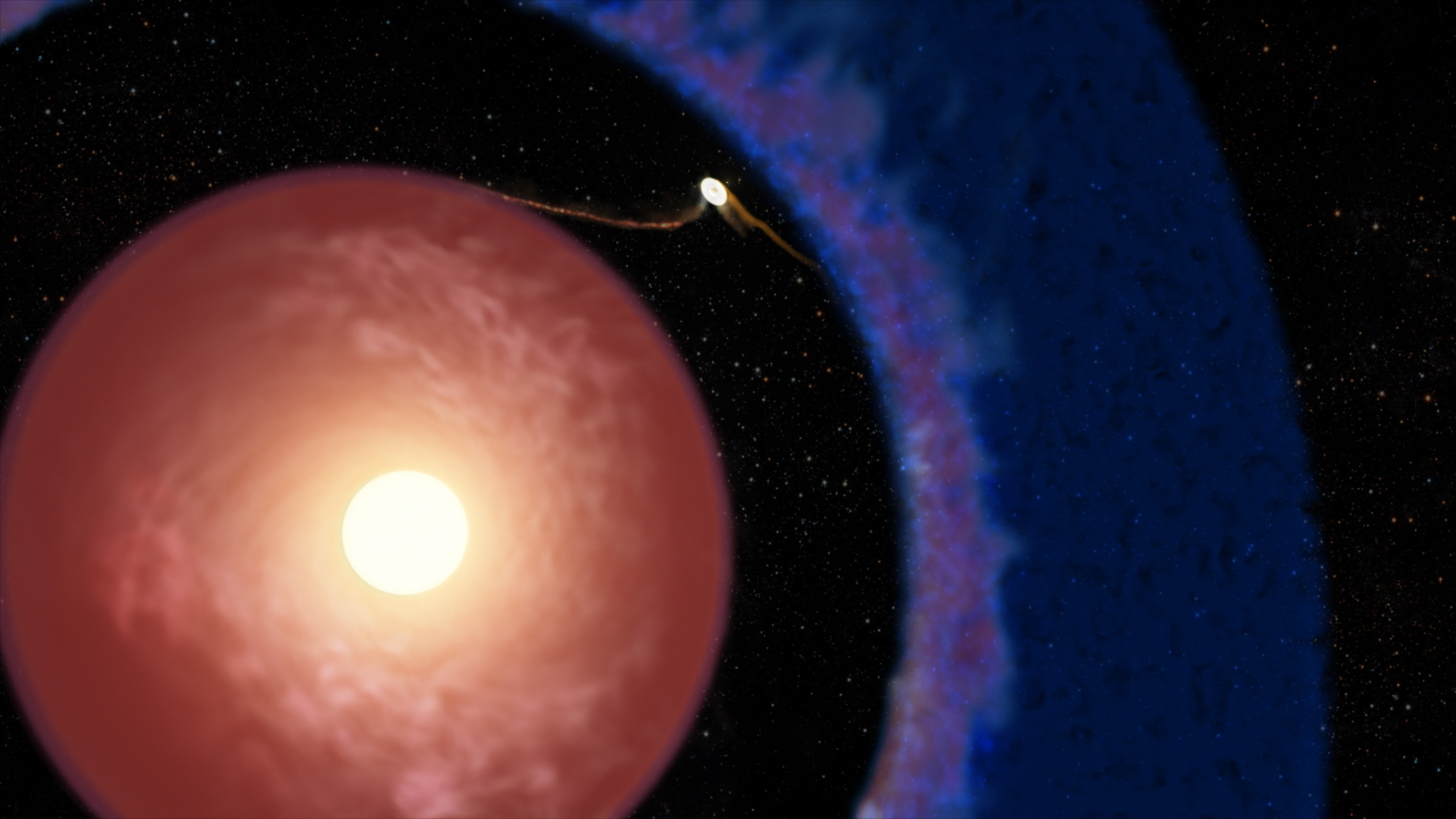
Newfound ‘Baby’ Planet Smashes Record for Youngest Known World
Astronomers have confirmed Elias 2-24 b as the youngest known exoplanet, which is less than a million years old. This discovery suggests that current planet-formation models are missing important processes.
Why it matters
This discovery provides a 'time machine' for scientists to study how planetary systems form, helping them understand the early stages of our own solar system.
The details
- The planet is 55 times farther from its star than Earth is from the Sun. - It was discovered within a gap in a debris disk of dust and gas. - Previous record holders for youngest planets were over 5 million years old.
What's next
The Nancy Grace Roman Space Telescope, launched August 30, will use a powerful coronagraph to detect more baby planets and Jupiter analogs.
Show entities and relationshipsHide entities and relationships
In this article
Organizations
Countries
Key connections
Lucas Cieza works at Instituto de Estudios Astrofísicos
Lucas Cieza, a professor at the Instituto de Estudios Astrofísicos
Instituto de Estudios Astrofísicos is located in Chile
Instituto de Estudios Astrofísicos in Chile
Andrea Bernardi works at Universidad Diego Portales
Andrea Bernardi, a doctoral candidate at the Universidad Diego Portales
Universidad Diego Portales is located in Chile
Universidad Diego Portales in Chile
W. M. Keck Observatory is a partner of NASA
W. M. Keck Observatory in Hawaii, which partners with NASA under a cooperative agreement
Atacama Large Millimeter/submillimeter Array is located in Chile
ALMA (Atacama Large Millimeter/submillimeter Array) in Chile
Show 2 more connectionsShow fewer connections
European Southern Observatory is located in Chile
The European Southern Observatory’s Very Large Telescope in Chile
NASA Exoplanet Science Institute is related to Caltech/IPAC
NASA Exoplanet Science Institute at Caltech/IPAC
Get the weekly recap
The stories like this one, picked and explained — once a week, straight to your inbox.