 Source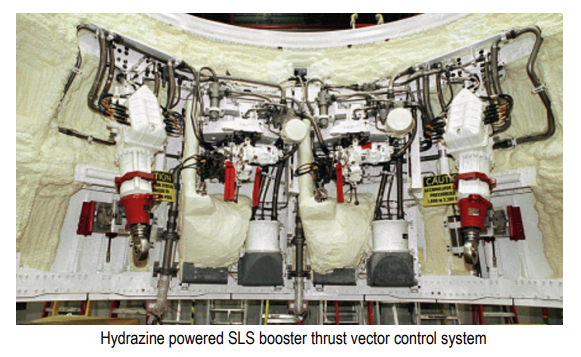
Risk of Hydrazine Use Following Freeze–Thaw Exposure
This technical bulletin communicates the risks of freeze-thaw cycles in hydrazine monopropellant systems and provides recommendations to mitigate operational hazards and system reliability loss.
Why it matters
Since hydrazine is toxic and essential for propulsion, preventing freezing avoids system failures and protects ground personnel from hazardous leaks.
The details
Partially thawed hydrazine can be 'slushy,' restricting flow and causing thruster misfires. High-fidelity thermal modeling is necessary because simple temperature readings are often unreliable. Post-freeze response involves suspending system use and conducting pressure decay tests. All freeze exposures must be recorded as reportable anomalies to track hardware life.
Show entities and relationshipsHide entities and relationships
In this article
Key connections
NASA is related to Space Shuttle
Multiple NASA programs have historically encountered hydrazine freeze related issues: Space Shuttle APU hydrazine lines
Multiple NASA programs have historically encountered hydrazine freeze related issues: Voyager propulsion systems
W. C. Ledeboer is related to Voyager
W. C. Ledeboer, “Creating a Voyager Thermal Model 39 Years Into the Flight Mission
Get the weekly recap
The stories like this one, picked and explained — once a week, straight to your inbox.