 Source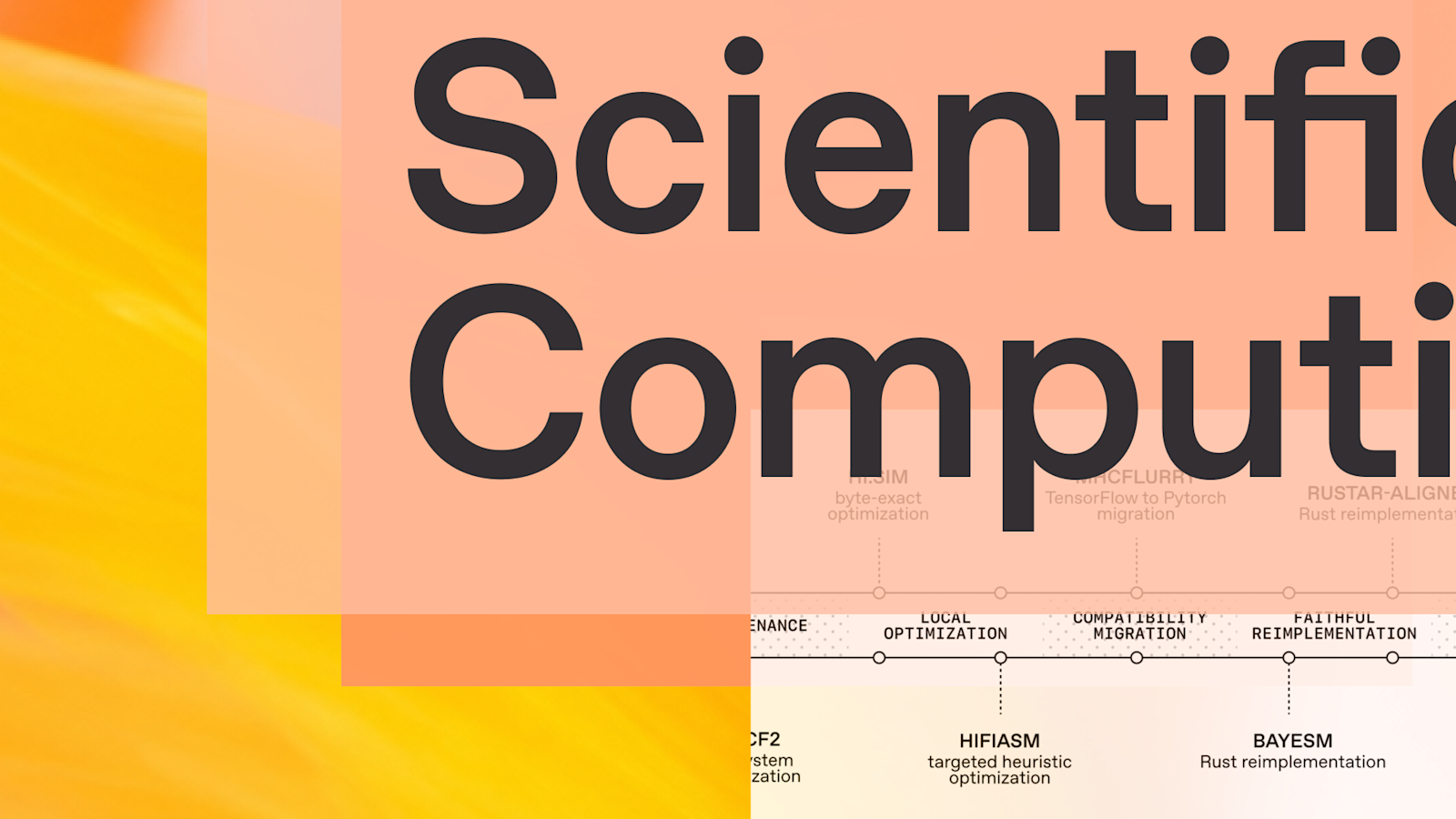
Scientific computing in the age of agentic AI | OpenAI
A field report details how scientists use coding agents to modernize scientific software, particularly in genomics and life sciences. It describes a shift where researchers focus on verification rather than implementation.
Why it matters
By reducing the need for specialized engineering expertise, these tools allow researchers to spend more time on discovery and less on tedious software maintenance.
The details
- Eight projects utilized Codex or Claude Code for optimization and language migrations.
- Human verification is critical as agents can be confidently incorrect about scientific validity.
- Effective implementation requires breaking broad goals into smaller, feedback-driven iterations.
Show entities and relationshipsHide entities and relationships
In this article
Products
Technologies
Key connections
Codex competes with Claude Code
Codex and Claude Code were both evaluated as coding agents for scientific computing projects.
Codex is related to Agentic AI
Codex is an agentic AI coding tool used for scientific software modernization.
Claude Code is related to Agentic AI
Claude Code is an agentic AI coding tool used for scientific computing tasks.
Codex uses Scientific Computing
Codex was applied across eight scientific computing projects to accelerate software development.
GPT-5.5 uses Scientific Computing
GPT-5.5 was used to modernize build and packaging systems for scientific computing libraries.
Related events
OpenAI publishes field report on agent-assisted scientific computing
Get the weekly recap
The stories like this one, picked and explained — once a week, straight to your inbox.